


Fetal Infant Mortality Review
Program Contacts
Michele Benko MS, RD, LD
Supervisor
216.201.2000 ext 1528
mbenko@ccbh.net
Erin Dodds MA
Program Manager
216.201.2000 ext 1534
edodds@ccbh.net
Program description
FIMR is a confidential, multi-disciplinary, multi-agency, community based program that identifies local infant mortality issues through the review of fetal and infant deaths and develops recommendations and initiatives to reduce infant deaths. The program brings together key members of the community to review information from individual cases of fetal & infant death. They identify factors associated with those deaths, establish if they represent system problems that require change, develop recommendations for change, assist in the implementation of change and determine community effects. The Fetal Infant Mortality Review Program (FIMR) is a grant-funded collaboration between the Ohio Department of Health (OD) and local partners, brought to Ohio in 2014.
Goal
To enhance the health and well-being of women, infants, and families by improving the community resources and service delivery systems available to them.
Connect with us
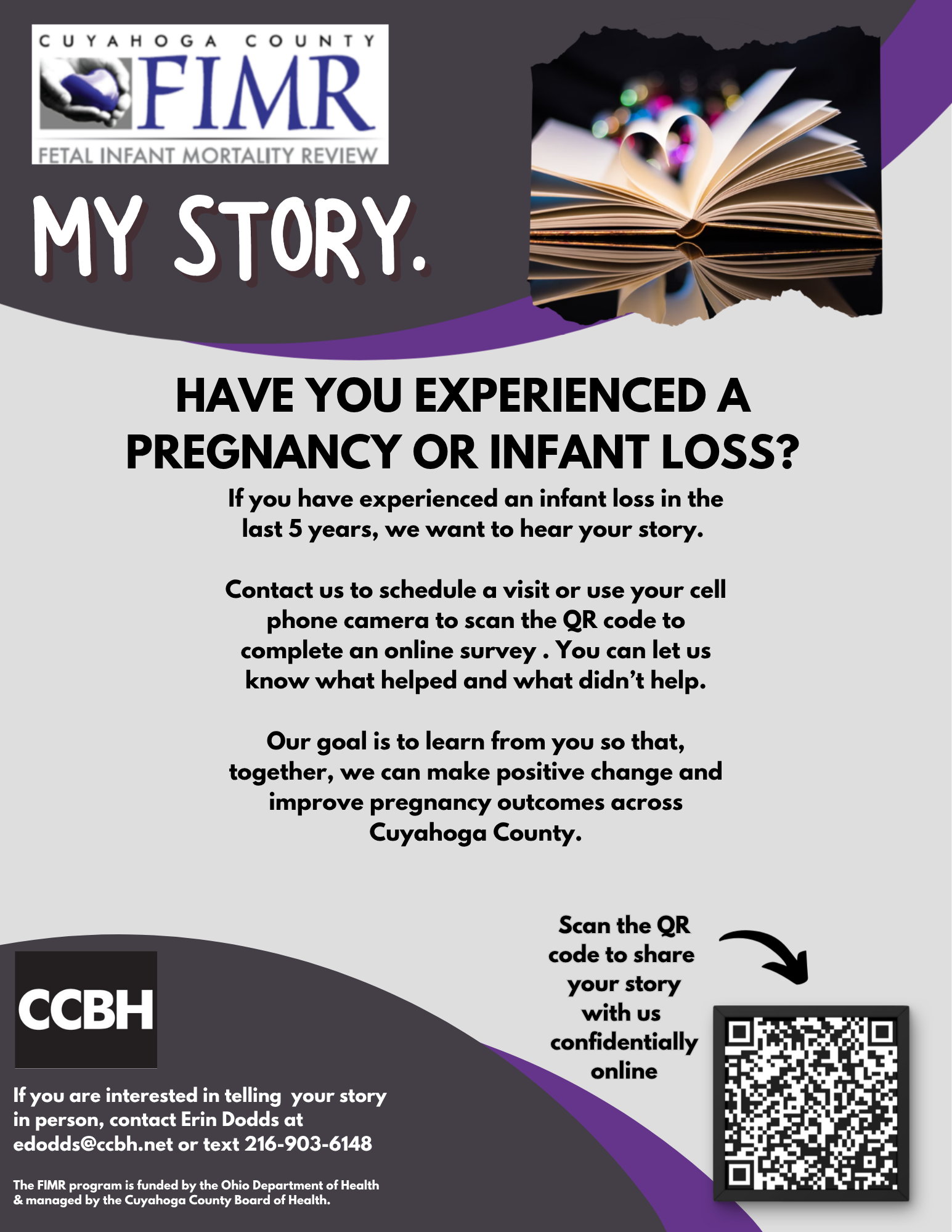
A unique component of the FIMR process is the invitation for families that have experienced a fetal and/or infant lost to share their story with local FIMR staff. If you are a Cuyahoga County resident that is interested in sharing your story please reach out to Erin Dodds, edodds@ccbh.net
FIMR Process
Case selection and data collection
Dedicated staff gather detailed, de-identified information from medical records and other sources.
Maternal interview
A crucial, voluntary interview with the family is conducted to hear their voice, experiences, and understand the context surrounding the death.
Case Review Team (CRT)
A multidisciplinary group (doctors, nurses, social workers, community members) reviews the de-identified case data, analyzing the “how” and “why” of the death, rather than assigning blame.
Community Action Team (CAT)
A separate, broader group that reviews the findings from the CRT, develops recommendations, and implements community-wide improvements.
Grief Resources
Interested in sharing your story of fetal and/or infant loss? Click here.
Grief Resources:
Cleveland Clinic Grief and Bereavement Services
Pregnancy and Infant Loss Society (PAIL)
Postpartum Support International