



Household Sewage
Program Contacts
Megan Conklin REHS
Supervisor
216.201.2001 ext 1266
mconklin@ccbh.net
Heather Grisez MPH, REHS
Program Manager
216.201.2001 ext 1231
hgrisez@ccbh.net
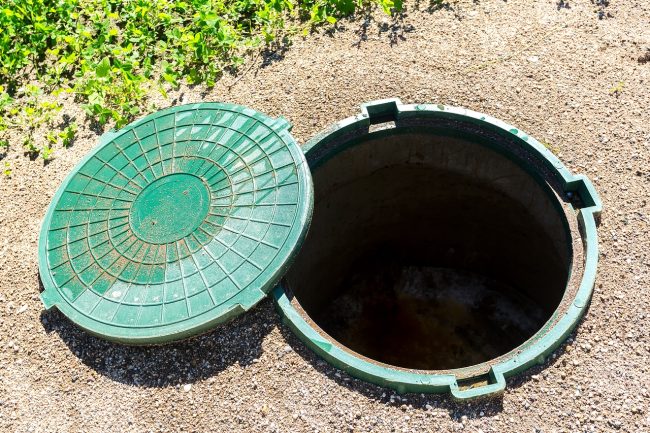
Household sewage treatment systems are needed to treat wastewater in areas that do not have access to a sanitary sewer. Many of these existing systems, because of their age or antiquated design, may not be capable of properly treating sewage. Our agency conducts a multi-faceted Sewage Treatment System Program which addresses water quality issues within the county. A total of 48 communities in our jurisdiction use household sewage treatment systems.
Approximately 8,000 systems are currently in use throughout these communities. The number of systems in use countywide has continued to decrease over the years as homeowners connect to a newly-installed sanitary sewers.
Click here to see the county’s current household sewage treatment system map.
System Evaluation Application/Program Fees
Statewide Sewage Treatment System Rule Update
In 2014, local health departments throughout Ohio were required to rescind all local sewage program rules and adopt the new statewide rules. The Ohio Department of Health (ODH) also required local Boards of Health to act on certain items within these rules.
These are the most significant differences/additions that impact locally established sewage programs:
Registration of installers, service providers and septage haulers – state testing & bonding with local registration and requirements for continuing education.
Allowance of homeowners to service and install their own HSTS with limited registration requirements.
Provisions in law and rules for the design, installation and permitting of gray water recycling systems (GWRS).
Allowance of local health department sanitarians to potentially conduct soil evaluations.
Development of a phased operation & maintenance management program for all STS throughout Ohio, requirements for length and cost of permits and provisions required for service of these systems.
Establishment of a vertical separation distance from the sewage effluent to the limiting condition of seasonal water which can be no more than 18 inches.
Establishment of an “in situ” soil requirement, which is the amount of unsaturated native soil.
Provision for the use of interceptor, perimeter and engineered drainage to depress the seasonal water table and create a subsurface gradient to improve site drainage.
Provision for establishing household sewage treatment districts.
Provision for establishing land application rules and prohibitions for septage.