



Drinking Water
Program Contacts
Mike Sekerak, REHS
Program Manager
216.201.2000 ext 1234
msekerak@ccbh.net
Tom Fink REHS
Deputy Director
216.201.2000 ext 1226
tfink@ccbh.net
Emergency Disinfection of Drinking Water
This information is provided for residential/household use and can be applied in these situations:
When the treatment and distribution facilities of a public or private water system cannot be operated on a normal basis
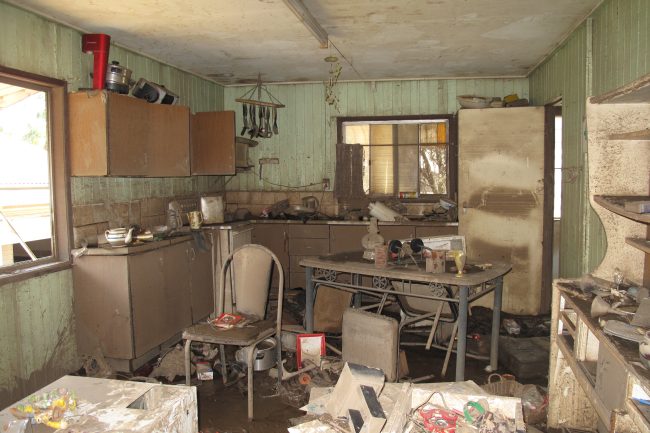
When a water supply has become flooded
When an extended power failure renders a water system inoperable
When the bacterial quality of available water is suspect
The methods described here will not remove or reduce toxic, chemical or radiological contaminants.
Water exposed to such contamination should not be used.
Sources of Safe Water During an Emergency
Contact your local health department and ask where emergency drinking water distribution points are located. Take clean covered containers for storage. Do not take containers that previously held harmful substances (read the label). If you know in advance that water will not be available for a long period of time, store some in clean covered containers.
A supply of water is available in the water heater and the holding tank (not the bowl) of toilets. However, this water should be purified according to one of the methods below. If water is drained from a hot water heater, the heater must be turned off.
If consuming items from your refrigerator or freezer, be sure they have not been submerged in flood waters.
How to Purify Water - Boiling
If the available water contains any suspended material or is cloudy, the water is to be strained through several layers of clean cloth or the water allowed to settle and the clearer water drawn off into a clean covered container.
Boil the water vigorously at or near 212°F (100°C) for one full minute to kill any disease-causing bacteria that may be present in the water. A microwave oven may be used to boil the water.
The flat taste of boiled water may be improved by pouring it back and forth between two clean containers before use.
How to Purify Water - Iodine
A tincture of iodine from a home medicine chest, a first aid kit, or the local pharmacy may be used to disinfect water. Add the appropriate following number of drops of iodine to disinfect the water.
If the water contains any suspended material or is cloudy, strain the water through several layers of clean cloth or allow to settle and draw off the clearer water into a clean container.
Tincture of Iodine to be Added
Clear water
2 drops per quart/20 drops per gallon
Cloudy water
10 drops per quart/40 drops per gallon
Mix water and iodine thoroughly by stirring or shaking water in the container. Allow to stand for at least 30 minutes to be sure that the water is safe to use.
How to Purify Water - Purification Tablets
Many commercial tablets which release chlorine or iodine are available for disinfection of water. They are usually available at drug stores or sporting goods stores.
Follow the manufacturer’s directions on the label for proper use.
Resources and Links
Centers for Disease Control and Prevention – Drinking Water
Centers for Disease Control and Prevention – Emergency Disinfection of Drinking Water
City of Cleveland – Division of Water
Ohio State University Extension – Disinfection Fact Sheet
Private Water Systems, including wells, cisterns, springs, and ponds
U.S. Environmental Protection Agency – Ground Water & Drinking Water
U.S. Environmental Protection Agency – Public Drinking Water Systems